
The History of the Villa
The History of the Kőrössy Villa
At the end of the 19th century, one of Budapest’s most elegant Art Nouveau districts developed in the immediate vicinity of the City Park, attracting architects, merchants, physicians and artists of the era. Among the outstanding Art Nouveau buildings in Budapest is the Kőrössy Villa, designed by architect Albert Kálmán Kőrössy as a private family residence.
In 1899, the young and exceptionally talented architect purchased the plot at Városligeti fasor 47, situated between the former properties of photographer György Klösz and painter Viktor Madarász. The villa was completed by the turn of the century, and in 1900 Kőrössy moved in with his wife, Dóra Paula Leóna Mária Román (Rosenberg).
The richly articulated façade places the Kőrössy Villa among the most distinctive examples of Art Nouveau architecture in Budapest. Its design reflects the Hungarian interpretation of the style, where natural forms, symbolic ornamentation and fine craftsmanship merge into a coherent architectural language.
Today, the villa also houses the most significant private collections of Zsolnay ceramics in Budapest.

Hungarian Art Nouveau Architecture at the Kőrössy Villa
Art Nouveau Façade and Ornamentation
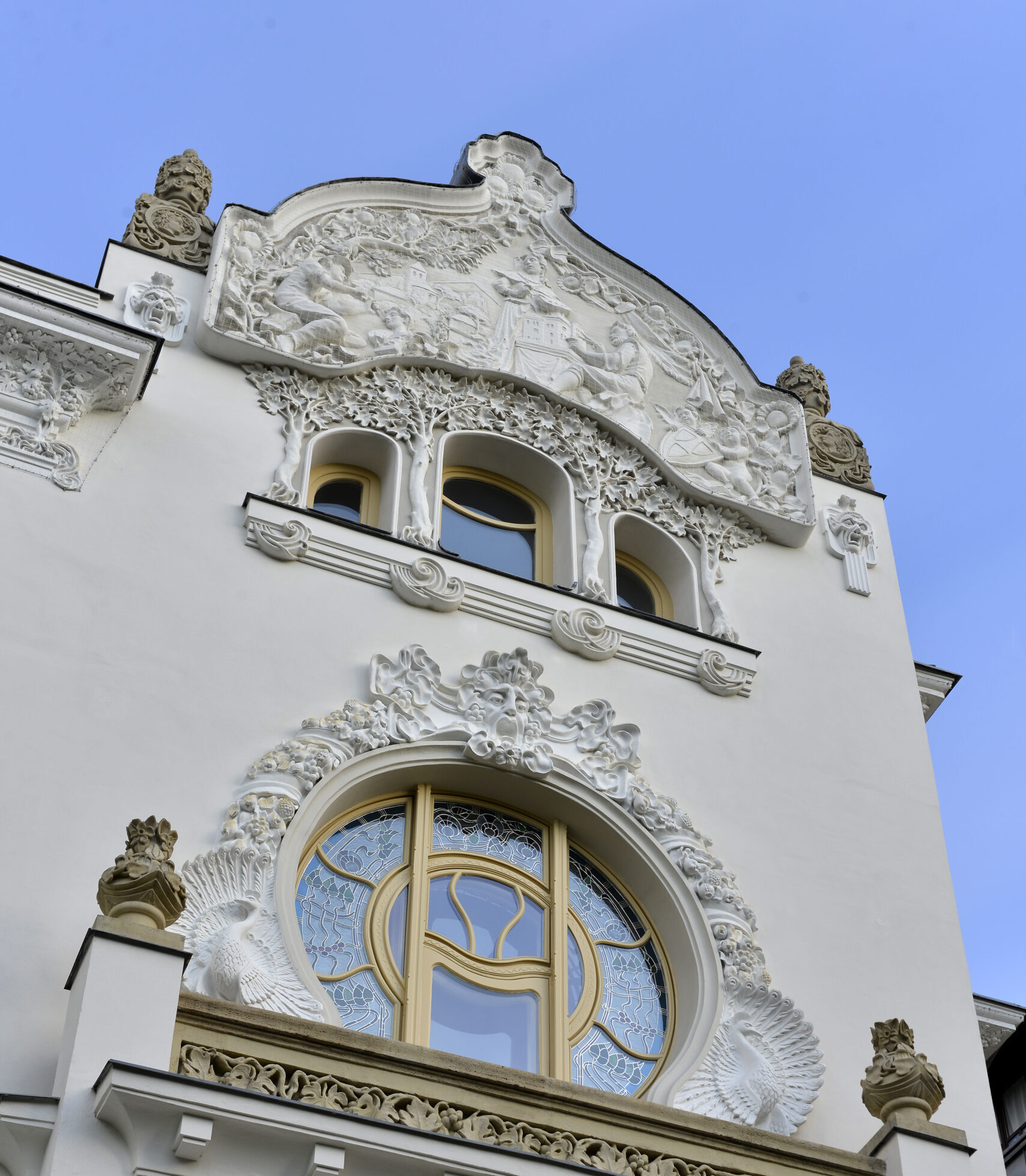
The façade of the Kőrössy Villa is richly decorated with sculptural ornamentation and dynamic wall surfaces, expressing one of the core principles of Art Nouveau architecture: the unity of structure, decoration and meaning.
Each opening on the main elevation is individually designed. On the ground floor, windows appear in paired and more complex balcony forms, while the upper level is defined by a large basket-arched window and a distinctive omega-shaped balcony—both characteristic features of turn-of-the-century Art Nouveau design.
The tympanum and window surrounds are filled with flowing floral tendrils, fruits and symbolic animal figures, including lions, peacocks, gorgons and nymphs. These motifs reflect the close relationship between nature, mythology and artistic expression that shaped the visual language of the period.
In the gable, the triple allegory of the Arts—Painting, Sculpture and Architecture—appears as a sculptural composition. The figure representing Architecture is widely interpreted as a self-portrait of Albert Kálmán Kőrössy, measuring a scale model from which the villa’s own lines emerge. The wrought-iron fence, harmonising with the façade, is attributed to the renowned craftsman Gyula Jungfer.
Together, these architectural and decorative elements embody the Art Nouveau ideal of the Gesamtkunstwerk—a total work of art in which architecture, applied arts and everyday life form a unified whole.
Many of these decorative principles can be explored further through the villa’s Art Nouveau–focused exhibitions.
Interior Spaces and Artistic Details
On the ground floor, the villa originally accommodated a salon and an open veranda, serving both everyday family life and social gatherings. The upper floor contained bedrooms as well as separate bathrooms, reflecting the modern living standards of Budapest’s bourgeois society at the turn of the 20th century.
One of the most striking features of the interior is the stained-glass window by Miksa Róth, located in the central hall. The composition incorporates symbols of abundance and renewal, including a stork, pomegranates, irises and sunflowers—motifs that also recur on the exterior façade. Through its rich colours and filtered light, the window establishes a visual and symbolic dialogue between interior space and Art Nouveau ornamentation.
Further enhancing the interior are finely crafted details such as the colourful wrought-iron staircase railing by József Hochmann. Together, these elements demonstrate the Art Nouveau ambition to unite architecture, applied arts and craftsmanship into a coherent artistic whole.
Kőrössy initially used the street-facing rooms as his architectural workspace. In 1903, a separate single-storey building was added at the rear of the plot, containing two smaller rooms and a dedicated studio. This later functioned as his architectural office, reinforcing the villa’s dual role as both a private residence and a centre of creative work.

The Villa in the 20th Century
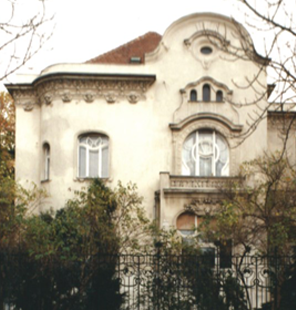
During the Second World War, the villa’s main façade was likely damaged by bombing and was subsequently reconstructed in a simplified eclectic style. Following nationalisation in 1948, the building became the property of the Offset Printing Company, which used the villa primarily for administrative purposes, while workshops and service functions were housed in the auxiliary buildings.
After the political transition, the villa entered a new chapter in 1994, when it was acquired by Resonator Ltd., founded by art collector András Szabó. This marked the beginning of its gradual transformation into a cultural site. Today, the Kőrössy Villa stands as a carefully restored example of Art Nouveau architecture in Budapest, preserving both its artistic heritage and the historical layers that have shaped its identity over time.
The Spirit of Art Nouveau in Architecture and Design
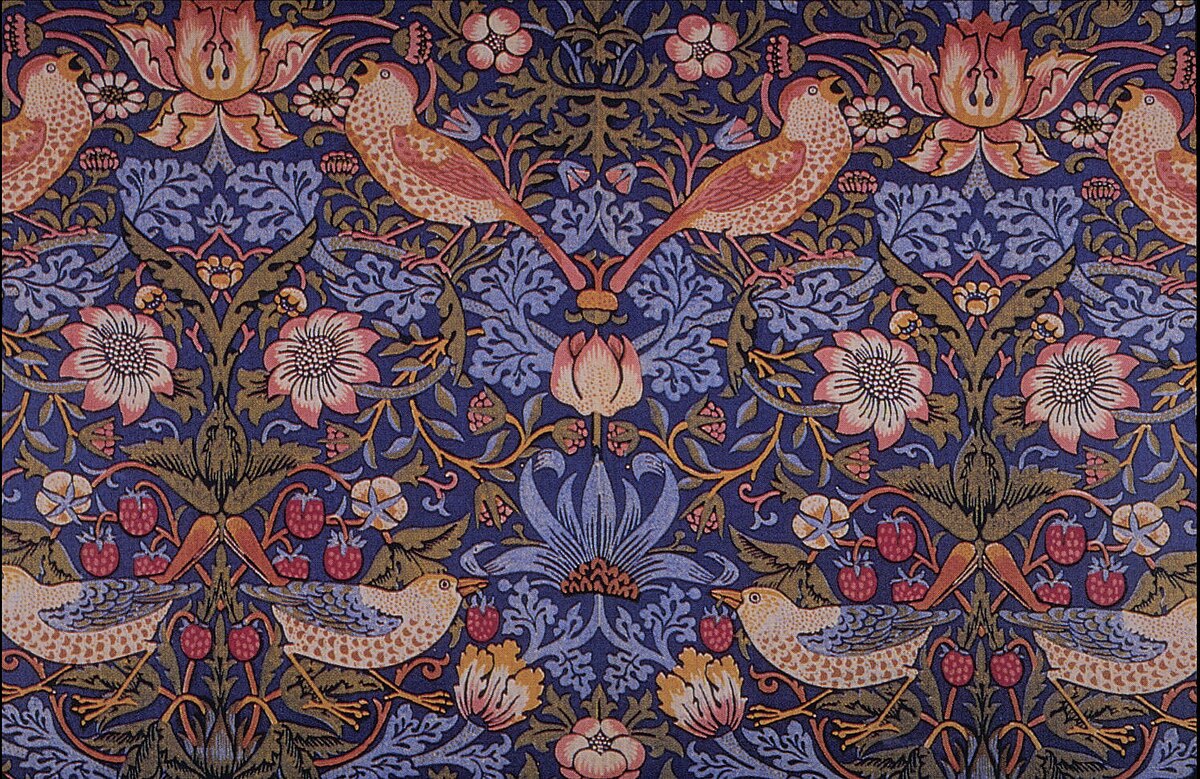
“Beauty is not a luxury, but a necessity,” wrote John Ruskin, founder of the English Arts and Crafts movement, whose ideas are considered a key intellectual precursor to Art Nouveau.
Emerging in the 1880s, Art Nouveau architecture and design developed as a response to industrial mass production. The movement sought to restore the value of craftsmanship and to reintegrate art into everyday life. This philosophy laid the foundations for one of Art Nouveau’s core principles: the unity of art, architecture and applied arts.
Nature-inspired forms, respect for handmade objects, and the harmony between function and aesthetics all stem from this way of thinking. Art Nouveau buildings and decorative arts celebrate the balance between beauty and usefulness, transforming daily life into an artistic experience.To explore this artistic worldview in greater depth, visitors can discover the Secrets of Art Nouveau through the ResoArt Villa’s dedicated exhibition and guided experiences.
Art Nouveau Across Europe
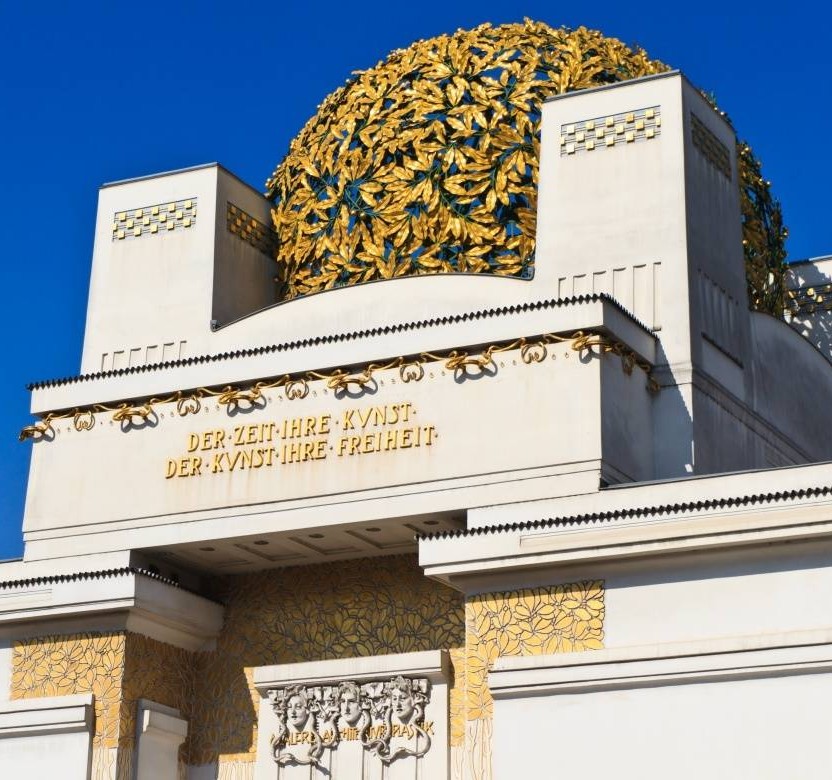
The term Art Nouveau itself gained its artistic meaning in Europe at the turn of the 20th century. Rather than a single, unified style, it represented a shared worldview—a departure from academic historicism and rigid formal traditions.
Across Europe, the movement appeared under different names and forms:
-
Art Nouveau in France and Belgium
-
Jugendstil in Germany
-
Stile Liberty in Italy
-
Modernisme in Spain
-
Modern Style / Arts and Crafts in Great Britain
Despite their stylistic differences—from Antoni Gaudí’s organic, flowing forms to Joseph Maria Olbrich’s restrained geometry—these movements shared a belief in architecture as a Gesamtkunstwerk, a total work of art where structure, decoration and function form an inseparable whole.
Hungarian Art Nouveau Architecture
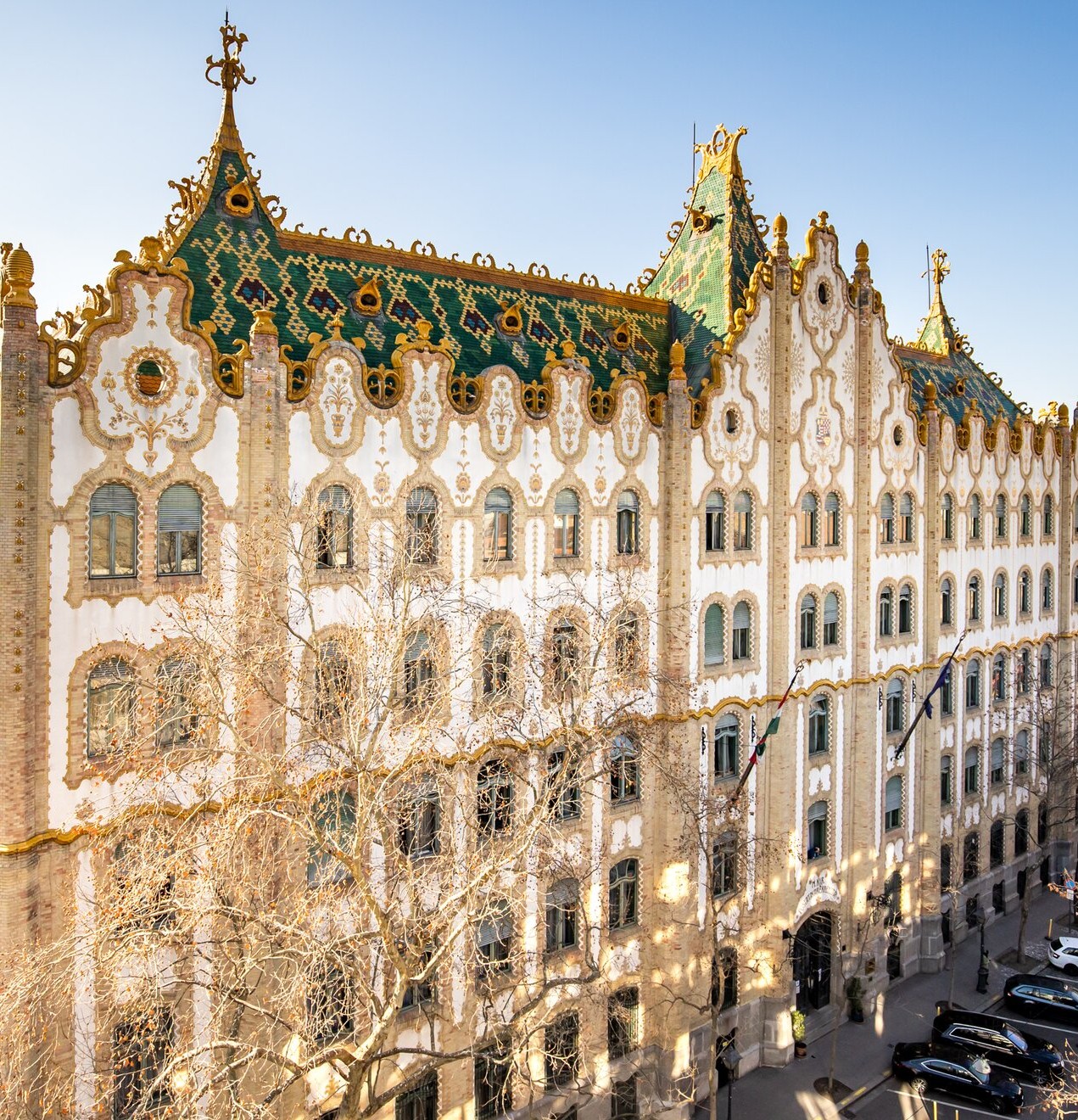
Hungarian Art Nouveau architecture developed under the influence of Austrian, German, French and British examples, yet quickly formed its own distinctive character. Social and cultural changes at the turn of the century played a crucial role in this process.
The aspiration for cultural independence following the ideals of 1848, along with the openness of a growing, art-patronising bourgeois society, created fertile ground for the emergence of a uniquely Hungarian interpretation of Art Nouveau.
Leading figures such as Ödön Lechner, Béla Lajta, Károly Kós and their contemporaries combined Eastern ornamentation, folk motifs and modern European architecture. Their work resulted in a highly original architectural language that expressed national identity through form and decoration.
Iconic Hungarian Art Nouveau buildings include:
-
the Museum of Applied Arts, Budapest (1896)
-
Kecskemét City Hall (1897)
-
the Hungarian Geological Institute (1899)
-
the Postal Savings Bank, Budapest (1901)
-
the Blue Church, Bratislava (1913)
Albert Kálmán Kőrössy and the ResoArt Villa
Albert Kálmán Kőrössy stands at the intersection of Hungarian Art Nouveau traditions and Western European influences shaped by his studies in Paris and Munich.
The villa he designed for his own family in 1900, today known as the ResoArt Villa, is a refined synthesis of these ideas—functional yet richly decorative, and conceived as a lived artistic environment.
As artist Aladár Körösfői-Kriesch expressed:
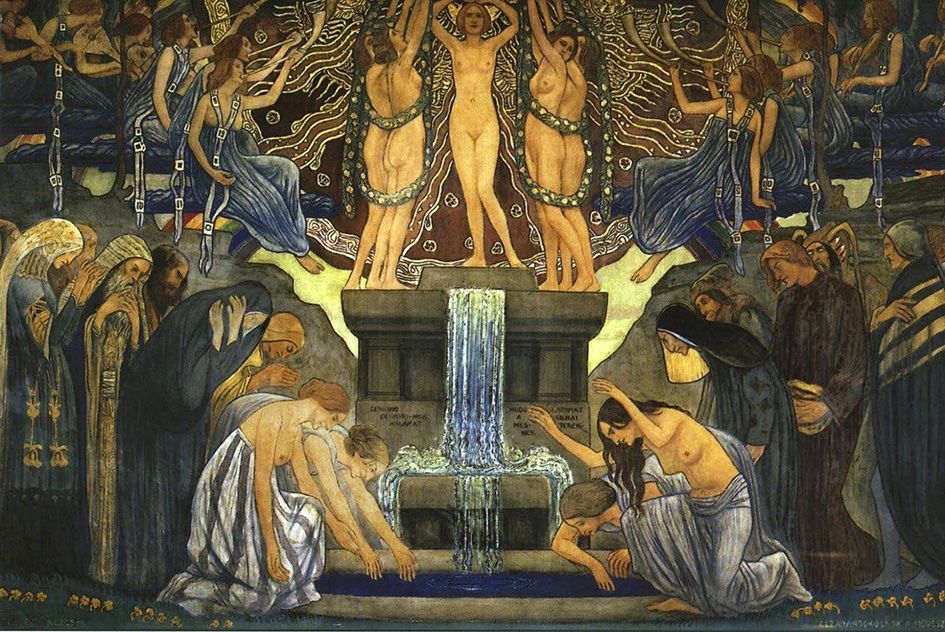
“Real life and high art must move closer to one another.”
Today, the ResoArt Villa remains one of the most authentic and immersive examples of Hungarian Art Nouveau architecture in Budapest.
Many of these decorative principles can be explored further through the villa’s Secrets of Art Nouveau exhibition, as well as its outstanding Zsolnay ceramics collection.